La plupart de mes ancêtres de Charente étaient agriculteurs. Beaucoup ne savaient pas lire et écrire jusqu'à la révolution, avec quelques exceptions. Parmi ces exceptions, certains ont pris des postes officiels comme garde des eaux et forets du Roy.
Certaines professons aujourd'hui disparues sont difficiles à documenter. Parfois elles sont peu significatives et personne ne s'est penché sur le sujet. Parfois elles sont obscures et peu de gens les connaissent. Parfois elles ont complètement disparu dans équivalent moderne.
Pour moi ça a été le cas des gardes des eaux et forêts du Roy. Depuis que je suis petit je sais qu'un de mes ancêtres l'a été. Et je sais que c'était différent, au moins dans les conditions, du garde champêtre moderne. Mais ne ne savais rien de plus.
J'ai fini par trouver quelques informations dans les articles de loi de Louis XIV sur Gallica. Les articles sont verbeux et répétitifs mais ils donnent une idée de ce qu'étaient leurs responsabilités et leurs conditions de travail.
Il y a eu dans ma famille au moins deux gardes des eaux et forets du Roy:
- Jean RAGUENAUD, né en 1709, fils de Anthoine RAGUENAUD et de Charlotte ROY.
- Francois RAGUENAUD, né en 1741, fils de Jean RAGUENAUD ci-dessus et Catherine GREGOIRE.
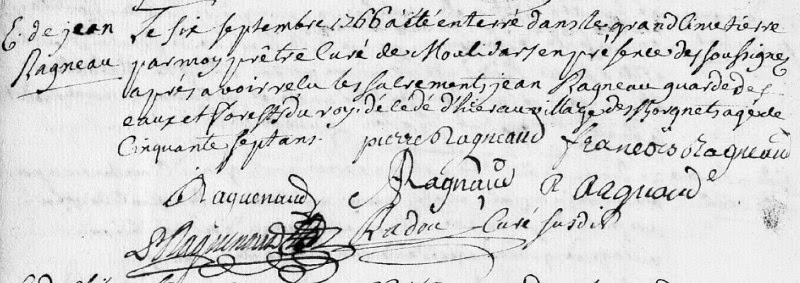
Les conditions pour pouvoir être nommé garde des eaux et forets du Roy étaient:
- Savoir lire.
- Savoir écrire.
- Avoir 2 voisins déclarant que le postulant était de bonne nature et digne de confiance.
- Posséder 200 lt pour une caution. Un jardinier gagnant en 1726 environ 400 lt par an.
Les gardes des eaux et forets étaient les sergents des gruyers qui recevaient leur serment. Contrairement aux gruyers, les sergents ne recevaient généralement pas de gages fixes et recevaient une portion de leurs prises.
Ils étaient responsables de la surveillance des forets d'un canton. Ils arrêtaient les usagers qui abusaient de leurs droits et les bestiaux délinquants puis les assignaient devant le gruyer. Ils devaient habiter dans les limites de leur garde et n'avaient pas le droit de s'occuper parallèlement d'un commerce ou d’élever des bestiaux. Ces prescriptions n’étaient évidemment pas toujours observées.
La responsabilité n'étant pas héréditaire, il est un peu surprenant qu'un père et fils l'aient eu. Peut-être la considéraient-ils comme une bonne façon d'arrondir les fins de mois. Ayant l'éducation nécessaire, ce qui était assez rare dans nos campagnes, ils n'ont peut-être pas eu beaucoup de compétition.
Apres la Révolution, la gestion des forets a change et les positions de gardes des eaux et forets ont disparu. Mes ancêtres ont été les derniers de la profession.
Certaines professons aujourd'hui disparues sont difficiles à documenter. Parfois elles sont peu significatives et personne ne s'est penché sur le sujet. Parfois elles sont obscures et peu de gens les connaissent. Parfois elles ont complètement disparu dans équivalent moderne.
Pour moi ça a été le cas des gardes des eaux et forêts du Roy. Depuis que je suis petit je sais qu'un de mes ancêtres l'a été. Et je sais que c'était différent, au moins dans les conditions, du garde champêtre moderne. Mais ne ne savais rien de plus.
J'ai fini par trouver quelques informations dans les articles de loi de Louis XIV sur Gallica. Les articles sont verbeux et répétitifs mais ils donnent une idée de ce qu'étaient leurs responsabilités et leurs conditions de travail.
Il y a eu dans ma famille au moins deux gardes des eaux et forets du Roy:
- Jean RAGUENAUD, né en 1709, fils de Anthoine RAGUENAUD et de Charlotte ROY.
- Francois RAGUENAUD, né en 1741, fils de Jean RAGUENAUD ci-dessus et Catherine GREGOIRE.
Les conditions pour pouvoir être nommé garde des eaux et forets du Roy étaient:
- Savoir lire.
- Savoir écrire.
- Avoir 2 voisins déclarant que le postulant était de bonne nature et digne de confiance.
- Posséder 200 lt pour une caution. Un jardinier gagnant en 1726 environ 400 lt par an.
Les gardes des eaux et forets étaient les sergents des gruyers qui recevaient leur serment. Contrairement aux gruyers, les sergents ne recevaient généralement pas de gages fixes et recevaient une portion de leurs prises.
Ils étaient responsables de la surveillance des forets d'un canton. Ils arrêtaient les usagers qui abusaient de leurs droits et les bestiaux délinquants puis les assignaient devant le gruyer. Ils devaient habiter dans les limites de leur garde et n'avaient pas le droit de s'occuper parallèlement d'un commerce ou d’élever des bestiaux. Ces prescriptions n’étaient évidemment pas toujours observées.
La responsabilité n'étant pas héréditaire, il est un peu surprenant qu'un père et fils l'aient eu. Peut-être la considéraient-ils comme une bonne façon d'arrondir les fins de mois. Ayant l'éducation nécessaire, ce qui était assez rare dans nos campagnes, ils n'ont peut-être pas eu beaucoup de compétition.
Apres la Révolution, la gestion des forets a change et les positions de gardes des eaux et forets ont disparu. Mes ancêtres ont été les derniers de la profession.
Most of my ancestors from Charente were farmers. Many could not read or write until the Revolution, with a few exceptions. Among those exceptions, some took on official positions such as royal water and forest warden (garde des eaux et forêts du Roy).
Some professions now extinct are difficult to document. Sometimes they are relatively minor and no one has taken the trouble to study them. Sometimes they are obscure and few people know about them. Sometimes they have disappeared entirely with no modern equivalent.
That was the case for me with the royal water and forest wardens. Since childhood I have known that one of my ancestors held such a position, and that it was different — at least in its conditions — from the modern rural warden (garde champêtre). But I knew nothing more.
I eventually found some information in the legal articles of Louis XIV on Gallica. The articles are verbose and repetitive but they give an idea of the responsibilities and working conditions involved.
At least two wardens appear in my family:
- Jean RAGUENAUD, born 1709, son of Anthoine RAGUENAUD and Charlotte ROY.
- Francois RAGUENAUD, born 1741, son of the above Jean RAGUENAUD and Catherine GREGOIRE.
The conditions required to be appointed as a royal water and forest warden were:
- Being able to read.
- Being able to write.
- Having 2 neighbours vouch that the applicant was of good character and trustworthy.
- Owning 200 livres tournois as surety. A gardener around 1726 earned approximately 400 lt a year.
The wardens were the sergeants of the gruyers (forest officers) who received their oath. Unlike the gruyers, the sergeants generally received no fixed salary and took a share of any fines levied.
They were responsible for patrolling the forests of a canton. They arrested those who abused their rights and any trespassing livestock, then brought them before the gruyer. They were required to live within the bounds of their beat and were forbidden to run a business or keep livestock on the side. These rules were obviously not always observed.
Since the position was not hereditary, it is somewhat surprising that a father and son both held it. Perhaps they considered it a good way to supplement their income. Having the necessary education — which was quite rare in rural areas — they may not have had much competition.
After the Revolution, forest management changed and the position of royal water and forest warden disappeared. My ancestors were among the last to hold the role.
Some professions now extinct are difficult to document. Sometimes they are relatively minor and no one has taken the trouble to study them. Sometimes they are obscure and few people know about them. Sometimes they have disappeared entirely with no modern equivalent.
That was the case for me with the royal water and forest wardens. Since childhood I have known that one of my ancestors held such a position, and that it was different — at least in its conditions — from the modern rural warden (garde champêtre). But I knew nothing more.
I eventually found some information in the legal articles of Louis XIV on Gallica. The articles are verbose and repetitive but they give an idea of the responsibilities and working conditions involved.
At least two wardens appear in my family:
- Jean RAGUENAUD, born 1709, son of Anthoine RAGUENAUD and Charlotte ROY.
- Francois RAGUENAUD, born 1741, son of the above Jean RAGUENAUD and Catherine GREGOIRE.
The conditions required to be appointed as a royal water and forest warden were:
- Being able to read.
- Being able to write.
- Having 2 neighbours vouch that the applicant was of good character and trustworthy.
- Owning 200 livres tournois as surety. A gardener around 1726 earned approximately 400 lt a year.
The wardens were the sergeants of the gruyers (forest officers) who received their oath. Unlike the gruyers, the sergeants generally received no fixed salary and took a share of any fines levied.
They were responsible for patrolling the forests of a canton. They arrested those who abused their rights and any trespassing livestock, then brought them before the gruyer. They were required to live within the bounds of their beat and were forbidden to run a business or keep livestock on the side. These rules were obviously not always observed.
Since the position was not hereditary, it is somewhat surprising that a father and son both held it. Perhaps they considered it a good way to supplement their income. Having the necessary education — which was quite rare in rural areas — they may not have had much competition.
After the Revolution, forest management changed and the position of royal water and forest warden disappeared. My ancestors were among the last to hold the role.